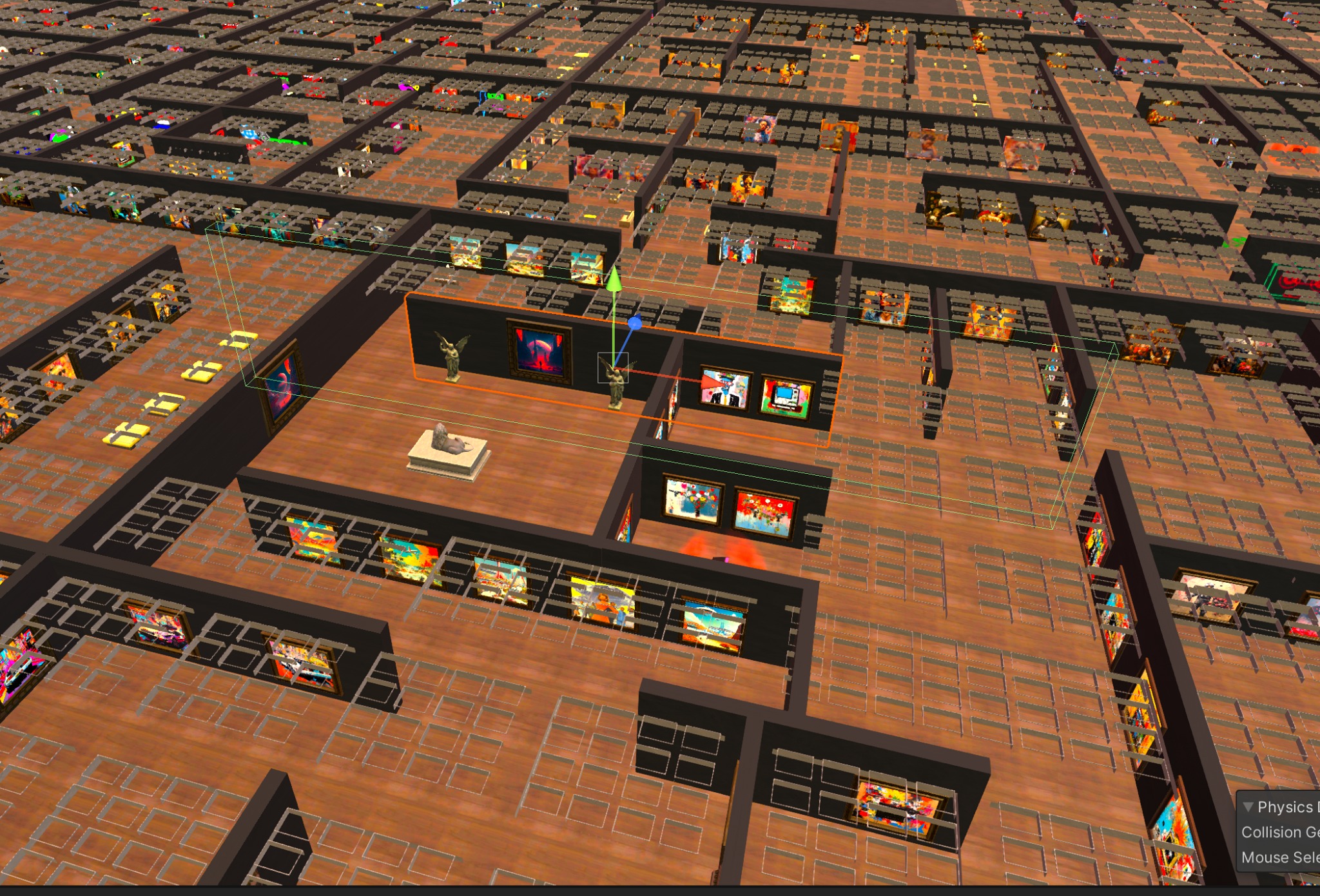
A public HARLEY.MEDIA exhibition, presented inside the Harley Museum of Art.
A permanent exhibition with a changing horizon
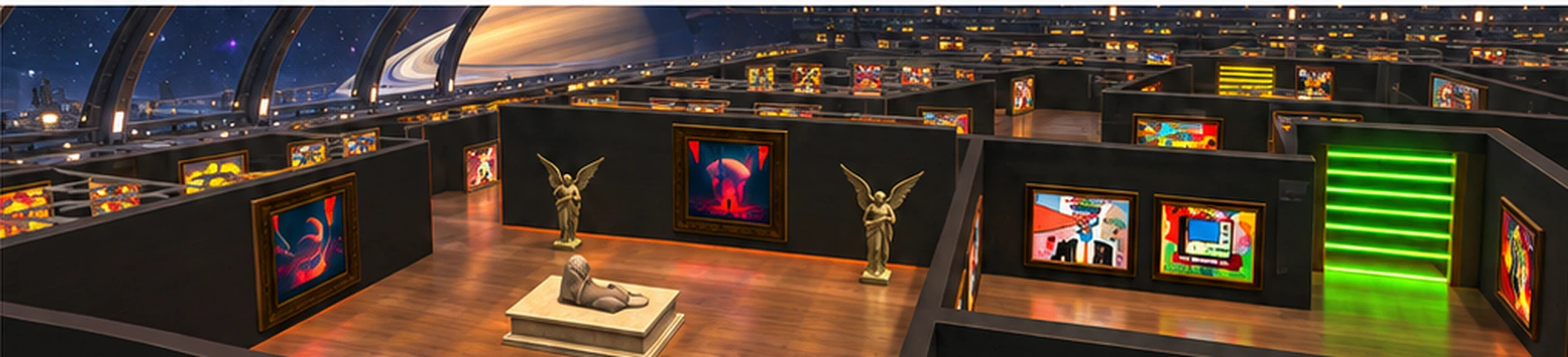
Saturn is the constant presence in the museum. Through the observation windows its rings act like a second architecture, framing walls and hanging works with the scale of an entire planet.
That contrast is the point. A small object in a gallery can feel monumental when it is the only thing illuminated. A large sculpture can appear delicate when the world outside is incomprehensibly vast.
Titan, Enceladus and the distant Jovian sky
The story places the museum on a space station with extraordinary views of Saturn and its moons. Titan provides the northward marker. Enceladus, Mimas, Rhea and Dione enrich the station visitor guide. Jupiter and its moons enter the longer narrative as an aspirational view across the solar system.
The station belongs to the Night in the Museum universe. Its cosmic views transform the galleries into a destination for art, science and exploration.

The museum as an instrument
Traditional galleries ask visitors to look at artworks. Here, architecture asks them to consider what it means to have a view at all. The window edits the universe into a composition. A threshold frames one fragment of space and hides everything beyond it.
That is precisely what every camera, painting and interface does: it chooses the part of the world we will see.

Editorial note
The Museum presents curatorial interpretations of published HARLEY.MEDIA work alongside the setting of Night in the Museum. Art, photography and film are credited to their source collections; the station and its visitor history are part of the game’s story.