In the photographs, nearly everyone is looking somewhere different. At a packed Philadelphia gathering in 2012, one person gestures toward the camera, another leans across a table, others are half-caught in conversation. There is no step-and-repeat wall, no perfectly arranged influencer portrait. What the photographs preserve is more useful: a scene figuring itself out in public.
For a generation of independent musicians moving between South Jersey and Philadelphia, a local showcase was not merely a night to perform. It was a way to find a producer, meet a photographer, test a song, connect with another act or convince a venue to offer the next date. Fresh Fuzion's two recurring concepts, Weekend Walkoff at Legendary Dobbs on South Street and Worldfuzion Wednesdays at Time on Sansom Street, belonged to that hands-on period of the city's underground music economy.
These were working nights, assembled by local organizers and carried by the artists and audiences who showed up. The surviving Fresh Fuzion Collective galleries, two volumes of photographs labeled “Philadelphia @ Legendary Dobbs. 2012,” help tell the story of what happened between the stage and the sidewalk.

One city, two kinds of rooms
At 304 South Street, Legendary Dobbs occupied a piece of Philadelphia music mythology. The address had first become known as J.C. Dobbs in the mid-1970s, and its low stage helped incubate independent acts long before large audiences knew their names. The room's history crossed genres: early appearances by artists such as Nirvana, Pearl Jam, Green Day and Oasis have since become part of South Street lore. Yet its more consequential achievement was structural. A comparatively small venue gave unsigned and emerging performers a place to practice in front of strangers.
That story was being formally remembered even in 2012. George Manney's documentary Meet Me on South Street: The Story of J.C. Dobbs returned to the venue that August, where the Philadelphia Inquirer reported that the screening was paired with an independent-music festival. Dobbs wasn't just the setting for past legends; it was still being asked to make room for future ones.
Weekend Walkoff operated in that lineage. For Fresh Fuzion, booking the room meant putting contemporary independent artists into an address already dense with musical memory. The point wasn't to imitate the acts who had once passed through. It was to use the same basic opportunity: a bill, a sound system, a set time and the possibility that somebody in the audience would remember.

Time, at 1315 Sansom Street, offered another kind of possibility. Opened in 2008, it was a restaurant, whiskey bar and live-music space in Center City, with a dining room, bar and upstairs programming. Contemporary reporting on its opening described a venue deliberately designed to combine dining and entertainment. Where South Street carried the memory of underground rock clubs, Sansom Street connected live performance to the rhythm of a restaurant and downtown nightlife.
That made the name Worldfuzion Wednesdays especially appropriate. The series gave independent performers another recurring destination, but it also made cross-pollination possible: someone out for dinner could encounter music they had not planned to hear, while an artist could introduce friends to an unfamiliar room. The showcase was both an artistic platform and a way to bring people through a working hospitality business.
Time did not disappear after the pandemic. It remains an active restaurant, whiskey bar and live-music venue, according to its current website. That survival matters because it distinguishes the spaces that adapted from the venues whose closures changed the city's geography.
A music scene does not stop at the Delaware River
Philadelphia's cultural orbit has always been wider than its municipal border. Camden sits across the Delaware River, connected by the Benjamin Franklin Bridge, with communities in Pennsauken, Cherry Hill, Burlington County and elsewhere in South Jersey routinely moving through the same regional economy. The Encyclopedia of Greater Philadelphia describes Camden's proximity to the city as an enduring part of its history. For independent artists, the route was equally practical: travel into Philadelphia for a set, a studio session or a collaboration, then take the ideas and relationships back across the river.
That cross-river movement complicates how local music gets labeled. A performer from South Jersey might be introduced as a Philadelphia act because that was where an audience discovered them; a recording made in New Jersey might come to life at a South Street showcase. Neither description captures the whole circuit. The cultural geography was made by people and movement, not by a single ZIP code.
Fresh Fuzion organizer Jase Harley was working within that cross-regional landscape. The Weekend Walkoff and Worldfuzion Wednesdays series were ways to assemble a public audience around independent music, inviting collaborators who might not otherwise share a stage or a social circle. They were less a genre-specific franchise than an open line between artists, promoters, audiences, photographers and venues.

What a hip-hop night contributes to a city
A small show can appear economically insignificant when measured only in ticket sales. But an event creates a chain of work. Someone designs the flyer; someone engineers the sound; a photographer documents the night; a bartender and door staff work the room. Musicians rehearse, pay for transportation, purchase equipment and return to the studio with new collaborators. Friends meet nearby, eat before the show and stay after the music stops. Not every event was profitable, and the benefits were unevenly shared. Still, culture moved money and attention through a neighborhood.
In 2012, the year of these Dobbs photographs, the Greater Philadelphia Cultural Alliance estimated that cultural organizations and audiences contributed $3.3 billion to Southeastern Pennsylvania's economy and supported about 44,000 full-time-equivalent jobs. Those figures describe a broad regional arts sector, not Fresh Fuzion, hip-hop alone or any one venue. Their significance here is that the so-called creative economy was not an abstract ambition. It depended on real people doing small, recurring work in real places.
For independent hip-hop, these rooms also supplied something a streaming platform cannot reproduce: social context. A rapper could share a bill with a band; a performer could learn to hold an audience that hadn't arrived specifically for them; a visual artist could find a client without submitting a portfolio. Music and art functioned as both expression and a way to enter the working life of a city.
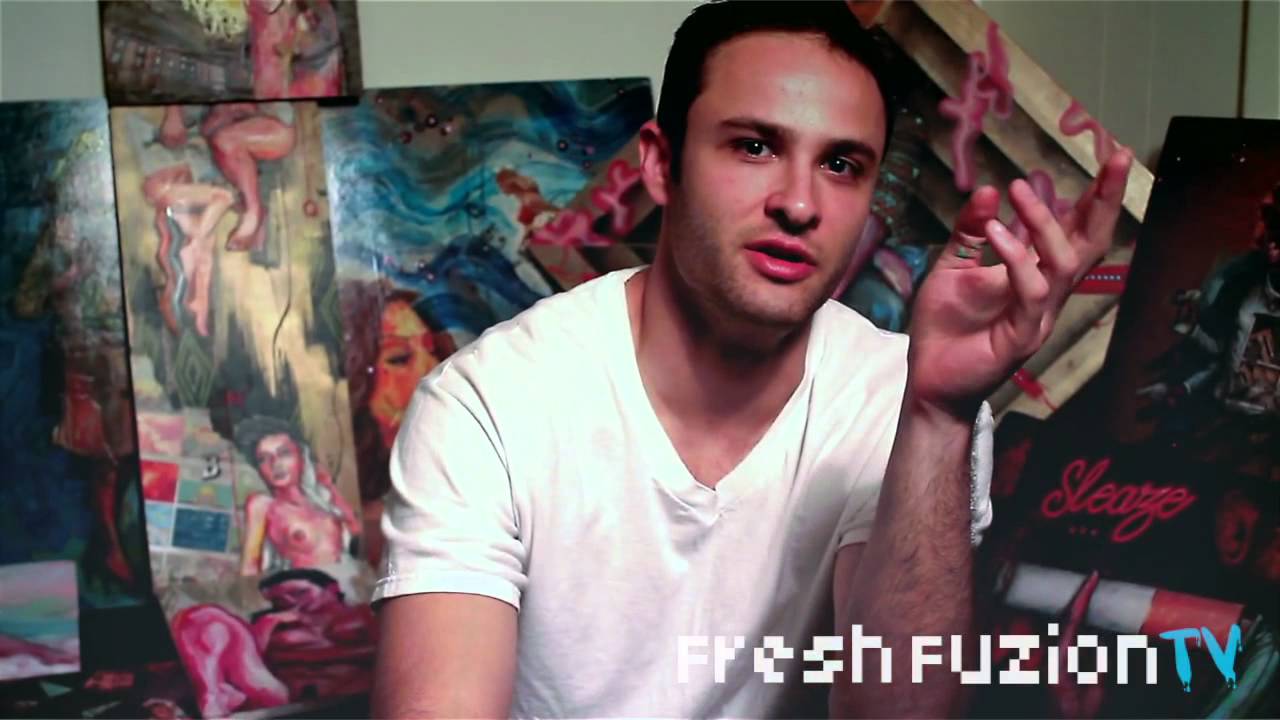
The same exchange was taking place in other Philadelphia rooms. At Fresh Fuzion shows around Fishtown, painter Jon Swartz made work live while musicians performed. A visitor who arrived for a set could leave having discovered an artist; a painting might introduce someone to a band. Fresh Fuzion's archived conversation with Swartz preserves the creative thinking behind that practice. A companion account of Swartz, Bookspace, the M Room and the Boom Room follows the wider music-and-art circuit. Those were distinct spaces and events, not evidence that Swartz performed at Dobbs or Time. Together, the archives show how small gatherings created opportunities across disciplines before those connections had an online profile.
When City Hall enters the room
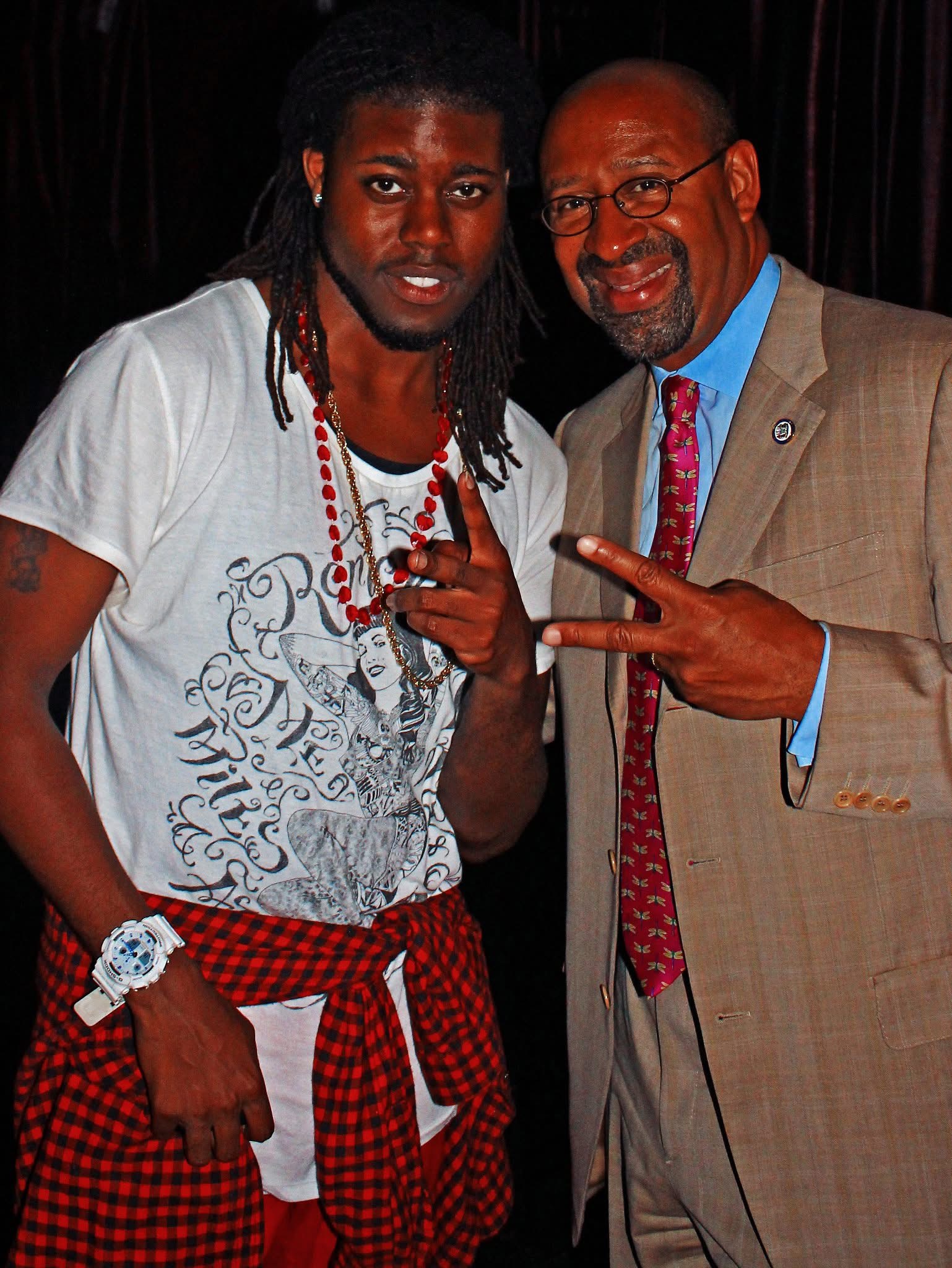
One photograph from the Fresh Fuzion archive shows Harley alongside a man the organizer identifies as Michael Nutter, then mayor of Philadelphia. Nutter served from 2008 to 2016. His presence at one of the gatherings, as recalled by the organizer, gives the archive an interesting civic dimension. It does not establish a city sponsorship or a government endorsement of the series, and the exact night shown in the image has not been independently dated.
The larger relationship between music and policy is documented. In 2008, Nutter's administration reinstated Philadelphia's Office of Arts, Culture and the Creative Economy, putting cultural participation inside the city's formal public agenda. A mayor appearing in the orbit of an underground event and a city creating an office devoted to the arts are different acts, but both point toward a question that is still unresolved: whether the places that generate cultural value receive enough support to survive once the city begins benefiting from their reputation.
The closures started before COVID; the pandemic made the cost visible
It would be convenient, and inaccurate, to say the pandemic took Legendary Dobbs. The incarnation known as Legendary Dobbs closed in 2015, five years before the first COVID-19 shutdowns. The building later hosted a new Dobbs operation, which closed in 2023; the address was subsequently slated for another use. Its changes reflect decades of turnover on South Street, not a single cause. The Inquirer traced that changing history in 2024.
But the pandemic made the precarity of independent rooms impossible to overlook. Philadelphia's Boot & Saddle, another valued small venue, closed in 2020 amid the economic disruption. Across the five-county Philadelphia region, the Greater Philadelphia Cultural Alliance estimated a $2.33 billion reduction in the arts and culture sector's economic impact between its 2019–20 and 2020–21 comparisons. That, too, is a sector-wide estimate, not a number attributable to live venues alone.
The effect of a closing doesn't end at the front door. A young performer loses a first-stage opportunity. An independent promoter loses a place willing to take a risk on an unfamiliar name. A city loses a social meeting point that may never have appeared in its official cultural map. Some rooms return under new operators, some change identities, and some vanish. What is harder to replace is the network of trust that made those rooms productive.

The archive is part of the city's music history
Looking back at the Weekend Walkoff and Worldfuzion Wednesdays gatherings is not an argument that 2012 was a perfect era. Some bills drew larger audiences than others. Artists carried their own expenses, venues faced financial pressure, and opportunities were distributed unevenly. The photographs nonetheless capture a form of cultural infrastructure that depended less on an algorithm than on a calendar, an address and an invitation.
The two Dobbs galleries have survived inside the Fresh Fuzion Collective, with 20 photographs in each volume. Together they form a visual record of people who were part of the region's independent music environment at a particular moment. Not every face or performance is identified in the surviving captions. Publishing them with the venue, year and source attached is a way to protect the history without inventing the missing details.
Philadelphia's underground was never only a Philadelphia story. It was made by the musicians traveling in from New Jersey, the artists who stayed in the city, the friends who brought friends and the independent venues that accepted the risk of putting them on stage. If the city wants the economic and cultural benefits of the next underground movement, it has to remember that those benefits are first created somewhere small.
From the Fresh Fuzion photo archive: Legendary Dobbs, 2012
Explore both original Collective Gallery volumes below. The photographs are displayed in their archival order. Select a thumbnail to open the original photograph. Their public presentation here does not identify or imply endorsement by the people pictured.
Volume 1: 20 photographs · tap to explore


Original photographs from the Fresh Fuzion Collective Gallery, uploaded as “Philadelphia @ Legendary Dobbs. 2012.”. Select any image to view the original file.
Volume 2: 20 photographs · tap to explore


Original photographs from the Fresh Fuzion Collective Gallery, uploaded as “Philadelphia @ Legendary Dobbs. 2012. [ Vol. 2 ]”. Select any image to view the original file.
Archival materials: two galleries published by Jase Harley to the Fresh Fuzion Collective in July 2026, documenting Philadelphia at Legendary Dobbs in 2012. The images remain attributed to that original archive. Additional Nutter photograph supplied by the Fresh Fuzion organizer.
Sources and further reading
- Philadelphia Inquirer (2012): J.C. Dobbs and Meet Me on South Street
- Philadelphia Inquirer (2024): the changing Dobbs address on South Street
- Philadelphia Inquirer (2008): Time's opening and original concept
- Time Restaurant: current venue information and live music
- Greater Philadelphia Cultural Alliance: 2012 regional economic impact
- Greater Philadelphia Cultural Alliance: COVID-19 cultural-sector impact
- Creative Philadelphia: history of the city's arts and creative economy office
- Encyclopedia of Greater Philadelphia: Camden and the cross-river region
- Related Urban Futurism: Fresh Fuzion's live art and Fishtown's underground rooms
- Related Urban Futurism: East Coast underground rap and New Jersey
Editorial provenance: Weekend Walkoff, Worldfuzion Wednesdays, the 2012 event photography, and the mayoral encounter are drawn from the organizer's firsthand account and Fresh Fuzion's archive. Independent references support the venue histories, civic context and economic figures; they do not independently verify every private showcase date or participant.