
URBAN FUTURISM / CARGOTECTURE / 04 · Explore the complete six-part series
“What state is best for a shipping-container home?” is the right question with one missing word: best for whom? Someone building a backyard studio on an existing serviced lot faces a different puzzle from someone buying rural land for a primary residence. The map offers possibilities; the parcel determines what is real.
There is no reliable national ranking that makes every container dwelling legal or financeable in a particular state. Building codes, factory programs, lending availability, weather, zoning and insurance collide at the county and municipal level. Even two neighboring towns can treat a similar structure very differently.
A shortlist built around distinct advantages, not guarantees
Oregon: clarity about containers as a building material
Oregon has an unusually useful official starting point. Its prefabricated-structures FAQ explains that shipping containers can be used as a building material, provided the applicant or qualified design team demonstrates compliance with the applicable specialty codes. Oregon also adopted updated residential rules for 2026. That is a clear framework for discussion, not an automatic approval for a house on any parcel.
Why it may suit you: a serious project with a designer willing to document materials and construction method. Watch for seismic engineering in the west, wildfire conditions, utility cost and the actual zoning of a candidate lot.
Texas: space and a defined industrialized-building pathway
Texas is often attractive to buyers seeking land or considering modular fabrication, but it is not a DIY free-for-all. The Texas Department of Licensing and Regulation has a formal industrialized housing and buildings program. Factory-built residential modules follow registration, review and inspection procedures. A parcel outside a city may have different land-use controls, while septic, floodplain, deed restrictions, windstorm and utility requirements still apply.
Why it may suit you: land-first projects with a clear installation plan and a builder who understands the TDLR system. The biggest risk is confusing a relaxed-looking rural site with permission to create an uninspected dwelling.
California: the strongest ADU policy conversation, not necessarily the cheapest build
California’s accessory dwelling unit rules and local housing programs give many homeowners a formal path to ask for a second dwelling on a legal lot. The state housing department lists financing and predevelopment resources. Some localities offer construction assistance, but programs are highly conditional, change or run out of money. The widely discussed former CalHFA ADU grant is not a fund readers should assume is open today.
Why it may suit you: an ADU on a property that already qualifies, especially where a local financing or pre-approved-design process is available. The counterweights are high land and labor cost, wildfire, seismic and energy requirements and the need for a lawful container-based design.
Washington: architecture heritage plus regulated modular approval
The Seattle region has real Cargotecture history, but a famous precedent does not waive current requirements. Washington Labor & Industries reviews factory-assembled modular buildings, while local jurisdictions evaluate installation sites. Its process can be useful for professionally fabricated projects; that rigor may be frustrating to buyers who imagine a truck can simply drop a finished unit onto a property.
Why it may suit you: a design-led studio or residence with a qualified fabricator, clear documentation and a high-functioning professional team. Check the specific city’s zoning, energy and seismic rules and whether the parcel supports the intended use.
New Jersey: a relevant test for the Northeast
New Jersey offers an instructive case for artists thinking about an affordable studio or small creative office. In 2020, Jase Harley explored such a space with Cargotecture designer Joel Egan, who pointed him toward the state's modular-building approval process. The New Jersey Department of Community Affairs oversees modular building review and explains how factory-built work is inspected. In August 2026, New Jersey also adopted updated national building model codes. None of that automatically makes a container dwelling permissible on a given lot; local zoning, utilities, site conditions and engineering still determine what can be built.
Why it may suit you: an existing, legally usable parcel for an office, studio or additional dwelling, with architects and officials involved early. Expect demanding reviews and the possibility that conventional modular construction is easier to finance than a custom modified container.
The five-question state scorecard
- Legal use: does the exact municipality allow the intended residence, ADU or workspace on the parcel?
- Permit path: is the unit reviewed as site-built or factory-built construction, and who approves each stage?
- Financing: can an actual lender and appraiser support the finished property type?
- Site economics: how much do utilities, foundation, access, taxes and insurance add?
- Climate: how will the design respond to wildfire, flooding, wind, heat, snow, hurricanes and seismic forces?
Do not buy land because a blog says “container homes are legal in Texas” or “California supports ADUs.” A yes for one use under one state law can coexist with a local no for a particular design. The most powerful tool is not a statewide ranking; it is a pre-application conversation with the local building and planning staff, followed by written confirmation.
The best state is the one where your exact project can be approved, financed and maintained. Sometimes the winning move is a smaller studio, an ordinary modular home or an addition rather than the container design you first imagined.
Sources and further reading
- Oregon prefabricated structures FAQ, shipping containers
- Texas TDLR industrialized housing process
- California HCD ADU funding resources
- Washington Labor & Industries modular building approvals
- New Jersey DCA modular building inspection
- NJ DCA, adoption of new model codes in August 2026
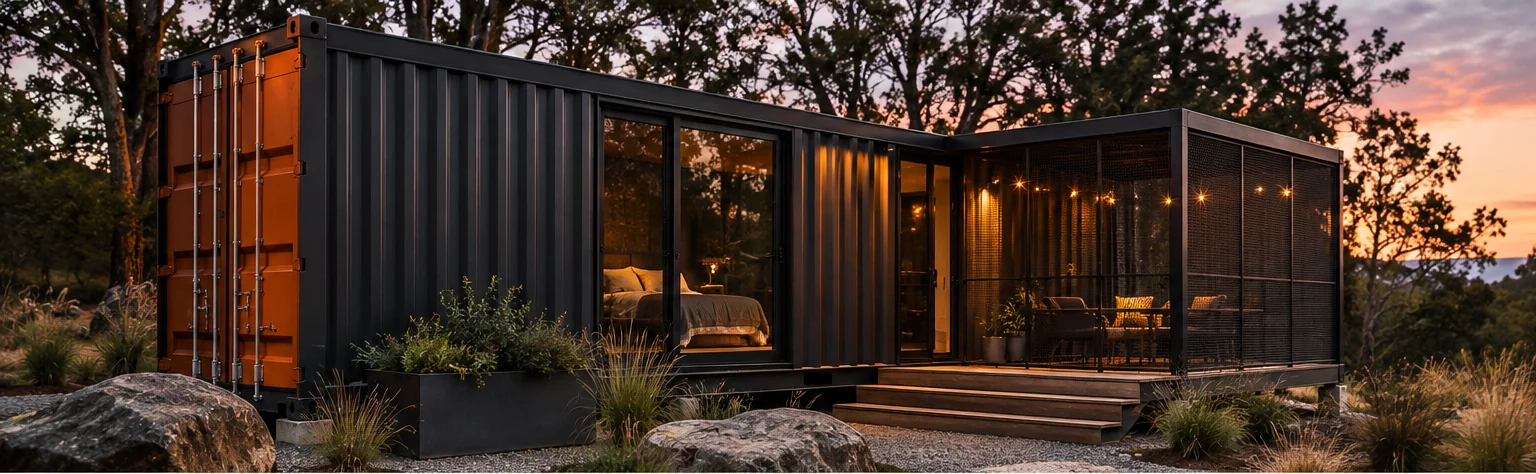
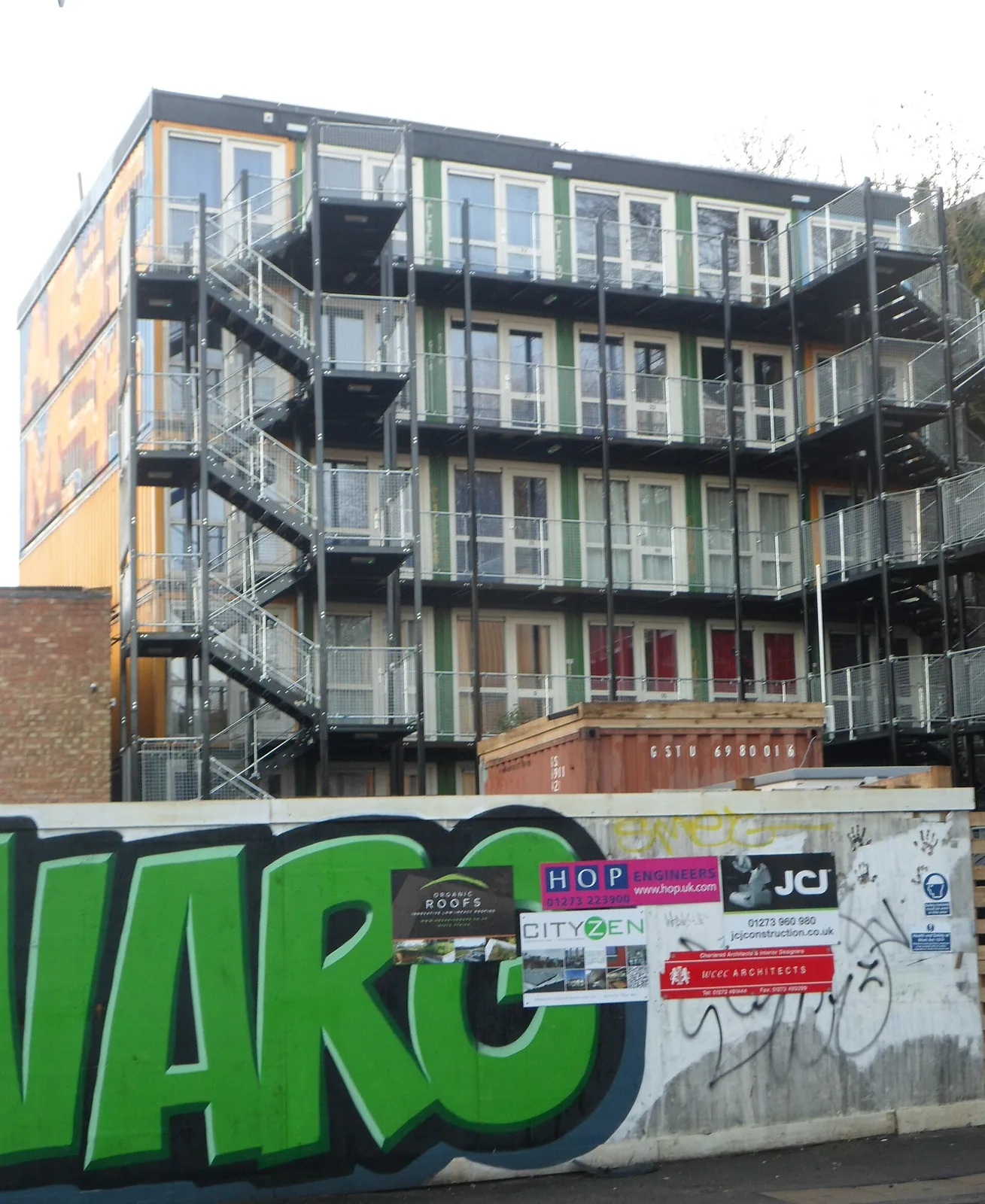
Original architectural illustrations are concepts; separately credited photographs show international built examples, not U.S. permit approvals. State comparisons are starting points, not permission to build. Confirm current local rules and financing for the specific parcel.
Keep exploring: Read the next chapter · All six Cargotecture stories · Urban Futurism


