There is a problem with calling hip-hop “alternative”: it assumes we know what the ordinary version is. De La Soul, Company Flow and DJ Shadow all made records that challenged expectations, but in almost completely different ways. One could turn a record collection into jokes, counterpoint and unexpected warmth. Another made the arrangement confrontational. The third built entire narratives without a conventional lead rapper.
That isn't a genre with a fixed drum pattern. It is a history of artists testing what the form can carry.
Experiment was in the original method
Hip-hop begins with people changing the intended function of records: a break becomes the center of a performance, a turntable becomes an instrument, a fragment can be isolated and reorganized. Once sampling equipment became more accessible, the possibilities multiplied. Calling this experimental is not to divide it from “real” hip-hop. The experiment is among the culture's foundations.
By the late 1980s, the Native Tongues circle offered a powerful alternative to a commercially narrowing picture of rap. On De La Soul's 3 Feet High and Rising, Prince Paul's production uses samples and playful interruptions as part of the argument. The music resists the idea that seriousness and authority must always arrive through an aggressive persona.
Not every independent record sounds alternative
Underground, independent and alternative have become interchangeable in casual discussion. They describe different things. Independence concerns who controls production and distribution. Underground can describe a scene's relationship to commercial visibility. Alternative often describes a creative difference from expected conventions. A record can meet all three definitions or only one.
That distinction becomes useful when the music gets abrasive. Company Flow's Funcrusher Plus treated drums, synthetic noise and dense writing as sources of friction. El-P's subsequent Definitive Jux label created room for artists such as Cannibal Ox, Aesop Rock and RJD2, but their approaches did not amount to one house style.
When the producer becomes the narrator
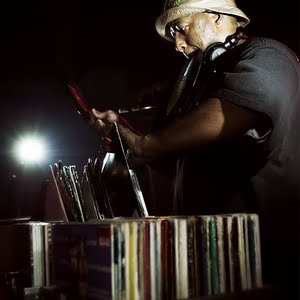
DJ Shadow's Endtroducing..... pushed sampled composition toward album-length instrumental storytelling. J Dilla's treatment of time made listeners reconsider precisely placed beats as an aesthetic ideal. These producers worked through listening, selection and rhythmic uncertainty as much as conventional songwriting.
Experimental hip-hop need not sound intentionally difficult. It can be warm, melodic, soulful or almost conversational. The decisions behind a record are often more revealing than its level of dissonance.
The new pressure to be recognizable
Streaming solved some distribution problems and created others. A musician can release without securing space in a record store, but recommendation categories reward recognizable patterns. Experimental records now exist in immense public catalogs and can still remain practically invisible.
The better way to listen is to stop using “alternative” as a quality award or a synonym for obscure. Ask what the musician changed, which conventions the record relies on, and which it refuses. That question makes room for De La Soul, Aesop Rock and a contemporary rapper singing over a deliberately unusual soul arrangement without pretending they belong to one narrow sound.
Further reading: KQED's Anticon history; Hieroglyphics' artist-owned history.