
A machine doesn't have to change for its possibilities to change. In October 2026, a producer calling himself Snare Bes published a free modification for Akai's portable MPC Sample. It loaded from a microSD card. Remove the card, restart the sampler, and the instrument went back to normal. Leave it in, and the same hardware gained up to 16 drum tracks, a step editor, pad-level EQ, a mixer with inserts and stem export. The processor hadn't been replaced. No new pads had appeared. The possibilities were hiding on the software side of the machine.
For anyone who has ever paid hundreds of dollars for a music workstation, then waited years for a basic feature request to make it into an update, the revelation carries a particular sting. The product you bought may not be the whole product your hardware could become.
Three weeks later, Akai was publicly encouraging people to create their own plugins with AI. Its new MPC 3.10.1 release introduced an official plugin development kit. Behringer, meanwhile, was promoting a forthcoming MPC-style sampler built around open development. A story about one person's sampler was becoming a story about the entire business of creative software.
It did not stop with music. During the same autumn, people were removing the advertising interfaces from smart televisions, bringing old PlayStation discs back to newer consoles, and publishing free, AI-assisted alternatives to Adobe's most recognizable applications. The results were uneven, sometimes fragile, occasionally astonishing. They were enough to pose a question many technology companies would rather not answer: if customers can create the functions they want, what exactly are they still paying manufacturers to permit?
I. The little card that complicated a billion-dollar idea
The MPC is inseparable from the history of sampling and hip-hop, but its contemporary descendants are also closed software environments. You buy the pads, screen, knobs and processor; the manufacturer decides which software features are available on that configuration. Some limits are physical. Others are engineering decisions, commercial segmentation or unfinished product plans. From the outside, the customer cannot always tell which is which.
SampQOL OS makes that ambiguity tangible. The mod's creator, Snare Bes, describes building it to improve his own workflow. The project documentation lists more tracks, chopping options, a mixer, looper functions, per-pad processing and additional export features. Importantly, it runs alongside the stock software rather than permanently rewriting the original firmware. Its own manual warns that it is beta software, that crashes can cost unsaved work, and that it is not supported by Akai.
It is tempting to turn this into a fairy tale about someone typing one clever sentence into Claude and accidentally liberating an instrument. The evidence doesn't support that neat origin story. SampQOL is a substantial independent mod; its developer does not describe the project as an open-source AI-generated firmware replacement. Hardware hacking also existed long before large language models, from the unofficial JJOS enhancements for earlier MPCs to communities building alternate synthesizer firmware.
What changed is the number of people able to participate. AI coding assistants can help translate a feature idea into source code, debug an existing project, explain unfamiliar libraries and automate the slower parts of development. The producer who previously needed a software engineer to build a specialized instrument can now attempt a first version themselves. That does not make the engineering trivial. It makes the first door easier to open.
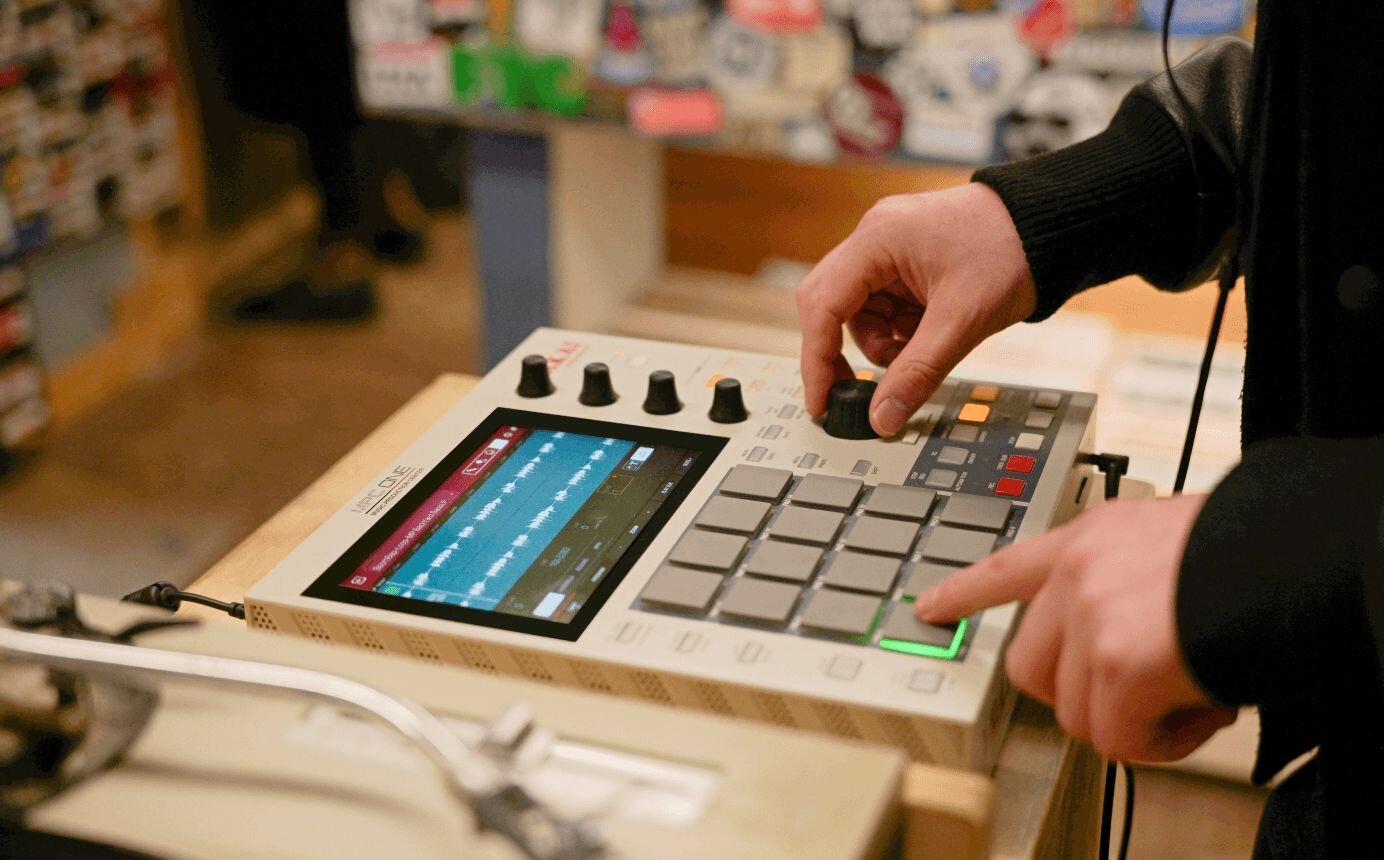
One of the most important historical objects in this story predates all of this. J Dilla's MPC3000, now held by the Smithsonian's National Museum of African American History and Culture, is a reminder that artists have long reimagined what technological tools are for. Dilla did not need to invent the MPC to make its timing and feel sound radically personal. Today's software-modification communities are applying a different form of authorship to the instrument itself.
II. October belonged to the hardware rebels
On October 27, Behringer revealed Kick, a prototype sampler and groovebox with a layout that immediately recalled the MPC One. It had the familiar pad matrix, touchscreen and controls, but the more consequential announcement was on GitHub. Behringer's parent organization, Music Tribe, had posted software resources for an open-source-oriented device and invited people to modify the instrument rather than wait for the factory to decide its future.
This wasn't simply a new effects expansion for Akai machines. Kick was a proposed competing product, and in November it was still an unreleased prototype. The public repository documented its software structure, while independent reporting noted that a source repository and a compelling prototype are not yet the same thing as a stable, shipping instrument.
The timing made the argument difficult to ignore. Akai began signaling community-friendly development for upcoming hardware. Then, on November 12, it released MPC 3.10.1, introducing experimental enhancements and an official MPC Plugin SDK for compatible standalone MPC and Force devices.
Akai's own documentation describes building instruments and effects with help from an AI platform, using plain-language descriptions rather than writing every line of C++ manually. The update also opened a route to compatible third-party plugins and introduced experimental settings affecting track limits and workflow.
Here the distinction between headlines and engineering is essential. The MPC operating system itself did not become fully open source. The SDK provides a supported way to create compatible plugins. Nor does switching off a software-imposed instance limit create more memory or processing power. Akai explicitly warns that unsupported plugins can cause glitches, freezing or crashes.
We also cannot prove that Behringer alone forced Akai's hand. It would be remarkable if multiple companies and communities weren't already considering similar developments. But sequence and motive do not have to be exaggerated to see what happened: an industry that had sold proprietary tools was publicly inviting independent people to expand them.
The pitch has changed from buy the features we finished to help invent the features that come next.
III. The plugin business meets a customer who can code
Think about the way music software is usually sold. A developer builds a compressor, synthesizer, sampler, reverberation engine or a tiny workflow utility. The product gets a name, presets, an interface and a price. A new version may introduce features that users have been requesting for years. Sometimes those features are difficult and expensive to produce. Sometimes the gap between a modest function and its retail price is difficult to defend.
AI development places pressure on the second category first.
Suppose a producer wants a delay that ducks beneath the lead vocal, changes its feedback with the velocity of incoming notes, and degrades its repeats in a particular way. The traditional options were to purchase several plugins, combine them through elaborate routing, write the effect manually or abandon the idea. An AI-enabled plugin SDK offers another route: describe the behavior, generate a prototype, listen, revise, and keep the result if it works.
That process will not suddenly recreate the careful modeling of a beloved analog circuit or the depth of a premium sampled piano. Real-time audio software is unforgiving; unpredictable CPU spikes can ruin a take. But a surprising number of commercial utilities are differentiated by convenience and packaging rather than impossible mathematics. Those are exposed to a new type of competitor: the user who wants only one feature and doesn't need to sell it to anybody else.
The market is moving from software designed for millions to software built for dozens, or for one person. A plugin might never be monetized, advertised or distributed. It might exist solely because someone wanted one impossible-sounding texture for a song.
And behind the scenes, the industry had already been laying the tracks. In October 2025, Steinberg moved its VST 3.8 SDK to the permissive MIT license, simplifying the licensing framework for developers. Along with projects such as JUCE, FAUST and open-source synthesizers, that decision matters because AI agents work best when they have real tools and interfaces to build against.
When the most useful part of a tool becomes easy to reproduce, charging for the tool alone becomes harder. The future premium may live in sound quality, distinctive design, artist-made libraries, reliable performance, updates and trust.

IV. The cancellation fee that turned into seven applications
Another story made the same point in a different industry. In October, software developer Brandon Thomas announced seven free, AI-assisted applications designed to resemble popular Adobe tools. The ArtCraft suite included programs for image editing, vector graphics, video, photography, PDFs, motion graphics and layout. Thomas said he used Claude Opus 5.5 to build the applications in Rust, and a dispute over an Adobe cancellation fee helped inspire the project.
It's a story with an almost too-perfect opening: a customer tries to leave a subscription, dislikes the cost of leaving, and decides to build alternatives. The kind of anecdote people share with friends because it makes an entire business model look suddenly vulnerable.
But the interesting part begins where the viral claim ends.
These were not cracked Adobe products or copies of its proprietary source code. They were independent software projects trying to recreate familiar functions and workflows. In their early releases, significant features were missing or unreliable. Digital Trends' hands-on reporting found promise alongside incomplete tools and performance gaps.
Then an independent software-quality firm examined the code. Software Improvement Group reported that the seven applications collectively contained more than 1.2 million lines of code, but none reached even two out of five stars for maintainability in its benchmarking. That is a remarkable contrast: generating a large amount of software was suddenly fast; making it dependable and easy to improve was still difficult.
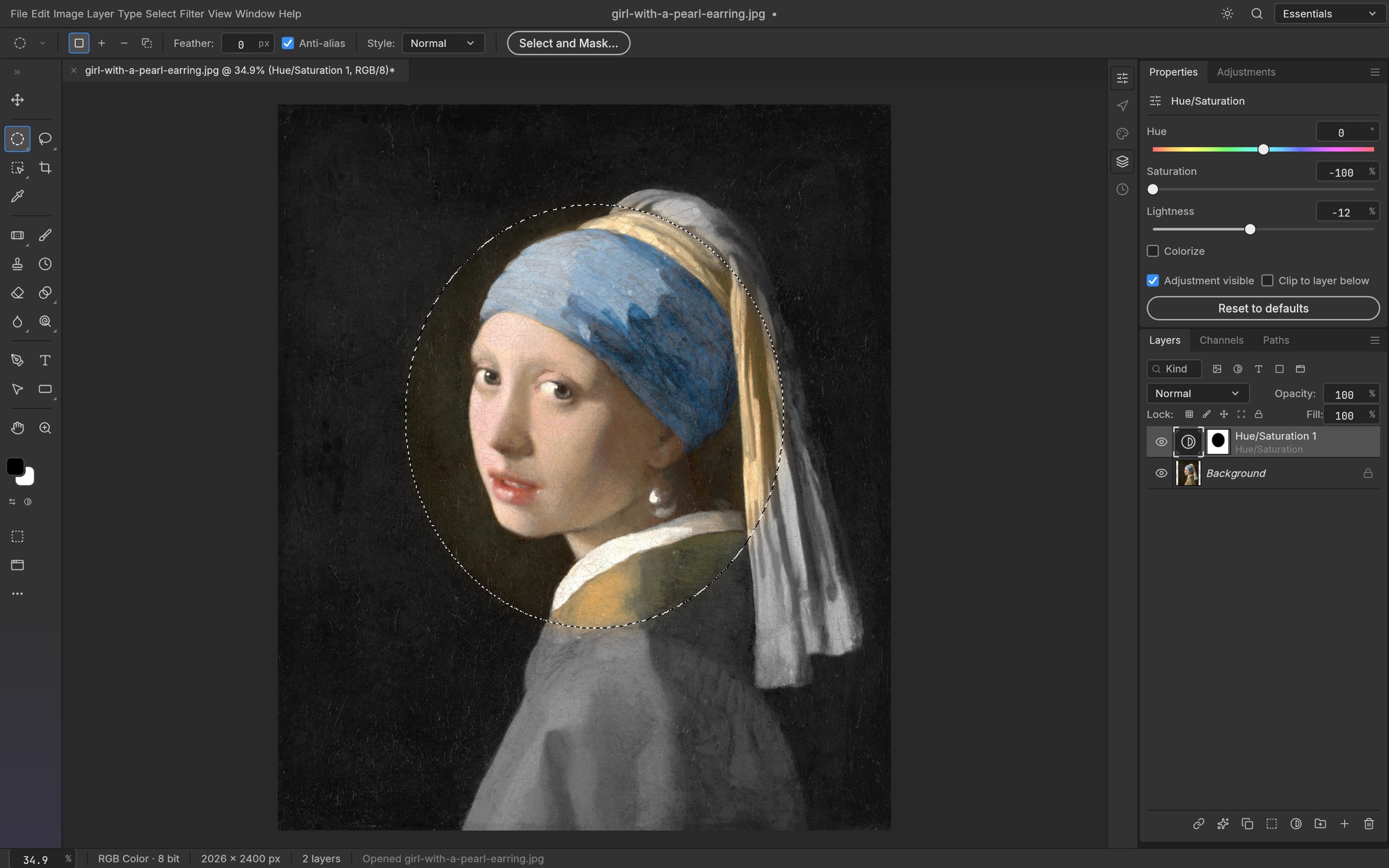
The commercial warning remains serious. Photoshop does not have to be defeated in every professional discipline for independent alternatives to erode some of its subscription demand. An occasional photo editor does not require the same depth of color management, collaboration, file interchange and automation as a professional production house. For many customers, sufficient software is enough.
One useful precedent is Affinity's move toward free access under Canva, with monetization structured around additional AI capabilities. Another is ArtCraft itself, whose paid creative-AI services help support freely distributed software. The disappearance of one price tag doesn't mean the disappearance of business. It may mean the business migrates to services, workflows, hosting, support or other premium capabilities.
Adobe still owns Adobe's code and trademarks. Independent developers can build competing tools, subject to copyright, patents, trade dress and license restrictions. What is being challenged is not the existence of intellectual property; it is the assumption that the effort required to build an alternative will always protect an established subscription price.
V. The PlayStation remembered what it was made to forget
A similar argument surfaced in a place where nostalgia is expensive. In October, the homebrew developer Sword demonstrated PS5SX2, a port of the established PCSX2 emulator that let compatible, modified PlayStation 5 consoles work with original PlayStation 2 discs. AI coding tools were part of the reported development effort. The decades of work behind PCSX2 were part of the achievement too, and they deserve just as much credit.
The demonstration mattered because it made an old cultural question newly practical: why should usable games become inaccessible when a manufacturer chooses a different commercial strategy? Sony has legitimate concerns about security, licensing and reliable support. Fans have legitimate interests in preservation and continued access to media they own.
The demonstration was not a universal unlock for ordinary PlayStation consoles. It depended on compatible, jailbroken hardware; game performance varied; and console security restrictions still mattered. Reverse engineering, lawful emulation and unauthorized distribution also raise different legal issues. Those realities should not be erased by a spectacular social-media video.

Still, the technical direction is striking. Community developers are getting better tools for adapting existing software to machines manufacturers no longer prioritize for certain uses. The product might age. The software community does not have to agree that its usefulness has expired.
VI. The television that people began subtracting from
One of the sharpest examples doesn't involve adding a feature at all. It involves removing one.
Smart TVs have slowly become shopping environments disguised as living-room appliances. Their home screens promote services, serve recommendations, collect viewing information and direct customers toward content arrangements that may have little to do with why the customer bought a screen.
In October, users drew attention to projects such as CleanYourTV, which use AI-assisted development and Android system tools to remove unnecessary packages or replace cluttered launchers. One report described a developer using Claude Code to clean dozens of unwanted packages from his parents' television. Another project, dumbtv, advocated a home screen stripped down to apps, inputs and a clock.
These tools don't work across every television brand. Android TV and Google TV are more accommodating than some other systems. Certain modifications may create security vulnerabilities, break supported features, or complicate updates. A photographed Xumo interface is not itself an example of a TV running CleanYourTV. But it shows the basic commercial problem: much of the contemporary television is software that stands between the buyer and the picture.

The social significance lies in the reversal of the question. A customer no longer asks only, 'Can I turn this advertisement off in Settings?' They ask, 'Can I replace the thing showing me the advertisement?' The manufacturer's business may depend on keeping the answer inconvenient. AI makes testing that inconvenience easier.
VII. The ownership argument everyone wants to oversimplify
There is a seductive slogan circulating around these developments: companies can own the machine, but they can't own the software anymore.
The law is not that simple. Companies can and do own copyright in their software, protect trademarks, license tools, enforce patents and control access to services. A customer doesn't acquire permission to distribute somebody else's code simply by buying the device it runs on. Rules concerning technological protection measures can restrict some forms of circumvention, even where a particular use sounds sympathetic.
But the opposite claim is also too broad. Owning one implementation of a function doesn't necessarily mean owning the function itself. A company can copyright the code for a compressor without holding an exclusive right to the idea of compressing audio. A manufacturer can choose not to develop a feature without thereby stopping every lawful independent developer from trying.
This is the distinction AI makes economically significant. Building a competing solution used to require a sufficiently funded company or a dedicated specialist community. Increasingly it may require a smaller team, existing open-source foundations, a coding agent and patience with testing. Competition can arrive from places that were previously too small to count.
For a business, the central asset may have to change from the only code that does this to the most trustworthy, useful and distinctive way to do this.
VIII. What happens when a plugin costs less than its marketing campaign?
Imagine a future in which a musician can generate a serviceable reverb in an afternoon. The reverb doesn't have to sound like every famous studio room, support every DAW, or come with a celebrity preset pack. It only has to do the job that musician asked of it.
For the mass market, the price of basic functionality could move toward zero. Small utility developers may see their margins erode. Companies that rely on artificial product tiers or minor upgrades could face criticism from customers who know how to prototype those features themselves.
That is only half the story. More people creating tools also means more unfinished tools, unsupported updates and security problems. Professional audio processing can fail in ways that are much more embarrassing than an incorrect browser layout. Live sound cannot tolerate a random freeze. A mastering session cannot rely on an effect whose behavior changes unexpectedly after an update.
This is why several businesses may become more valuable rather than less: developers who build distinctive DSP; engineers who test and optimize real-time systems; marketplaces that certify compatibility; companies that maintain trusted versions; and creators who supply exceptional sounds, instruments and presets. The marketplace for software could increasingly resemble the marketplace for musical instruments, where two objects may perform similar functions but offer dramatically different feel, response and cultural meaning.
In other words, a plugin company may stop selling access to a basic possibility and begin selling confidence in a particular experience.
The winner might not be the company that writes the most code. It might be the company that knows precisely which code is worth keeping.
IX. The subscriptions may move rather than disappear
There is an irony beneath the free-software triumphalism. A developer who cancels five plugin subscriptions may then pay monthly for an AI coding service, cloud compute, testing infrastructure and managed distribution. Another who replaces an Adobe application with an open-source alternative may still subscribe to storage, collaboration, training or professionally curated assets.
The revenue has not necessarily vanished. It has moved.
AI companies could become the new gatekeepers if software creation depends on proprietary models, expensive compute, non-portable agents or hosted execution environments. The language of independence would then sit atop another recurring bill.
For independent artists and small studios, a stronger strategy is to own the pieces that can reasonably be owned: source files, customer relationships, project formats, content libraries, data exports and distribution channels. Open standards are valuable not because everything must be free, but because a creator should have options when a vendor changes its prices or priorities.
This is a business question as much as an artistic one. When development becomes more accessible, an independent musician might build a production utility, a label might create private publishing software, and a creative collective might operate an application tailored to its members without waiting for a large platform's roadmap. There is still work, cost and risk. There is also less reason to assume that the only reasonable solution must be bought off someone else's shelf.
X. Who gets to decide what a device becomes?
The future of software will probably not divide neatly into proprietary villains and open-source heroes. Open projects can fail. Commercial products can be superb. Community developers can overlook security. Large companies can fund the unglamorous maintenance that makes a tool trustworthy. Some restrictions protect people; others protect revenue. Telling the difference requires attention to the actual technology.
Still, a remarkable cultural threshold has been crossed. People who are not employed by a manufacturer are becoming capable of expanding, repairing and personalizing products at a pace that changes the manufacturer's position. Customers can increasingly arrive with working prototypes rather than feature requests.
That is both exhilarating and uncomfortable. The programmer's job isn't disappearing; the frontier between asking for software and making software is moving. Engineers who understand architecture, security, audio performance and long-term maintenance will still matter. They may matter more in a world capable of producing millions of lines of plausible but imperfect code in days.
Return to the MPC. The historical instrument pictured above belonged to J Dilla; the 2026 mod was made for a different model. Their connection is not a fictional shared software lineage. It is the stubborn insistence that technology's official instructions do not exhaust its creative possibilities.
The old sampler did not wait for the company to imagine every record that could be made with it. Today's developers are beginning to ask the same question of the code running inside the hardware.
Companies can still own their software. What they can no longer take for granted is the customer's dependence on it.
The real disruption isn't that anyone can write anything. It's that people who once had to ask permission are learning how to build an answer.
Sources and further reading
- Snare Bes: SampQOL OS documentation, source notes and limitations; independently developed Akai MPC Sample modification, October–November 2026.
- SampQOL OS manual; SD-card operation, workflow features and safety limitations.
- Akai Professional: MPC 3.10.1 enhancements and plugin SDK FAQ; official compatibility, tools and caveats.
- MusicRadar: Akai's AI-assisted MPC Plugin SDK; November 12, 2026.
- Music Tribe: Behringer Kick development repository; public source and development resources.
- MusicRadar: Behringer Kick and community firmware; October 28, 2026.
- Steinberg: VST SDK and MIT license; October 2025 licensing change.
- Digital Trends: ArtCraft alternatives and their early limitations; October 2026.
- Software Improvement Group: independent ArtCraft code-quality analysis; November 2026.
- Swordpdf: PS5SX2 project and documentation; homebrew emulator requirements and compatibility.
- TechSpot: AI-assisted PS5SX2 disc support; October 2026.
- Decrypt: AI-assisted television interface modification; October 2026.
Featured image: Akai MPC3000 Limited Edition owned by J Dilla, photographed by Alex Jamison for the Smithsonian's National Museum of African American History and Culture, via Wikimedia Commons (CC0). This is an archival illustration of the MPC legacy, not the MPC Sample modified in 2026. In-body images carry their own source and licensing credits. Editorial distinction: The existence of an independent hardware modification does not by itself establish that the developer used generative AI, and the sequence of Behringer and Akai announcements does not prove one company caused the other's release. Technical claims reflect publicly documented releases as of November 23, 2026. Business outlook is editorial analysis.


